How the Golden Hour Turns a Cannes Sunset into Your Most Unforgettable Wedding Photo
As the sun melts into the Bay of Cannes, golden light wraps around you—here’s how to turn that fleeting glow into your most breathtaking, unforgettable sunset wedding photograph.
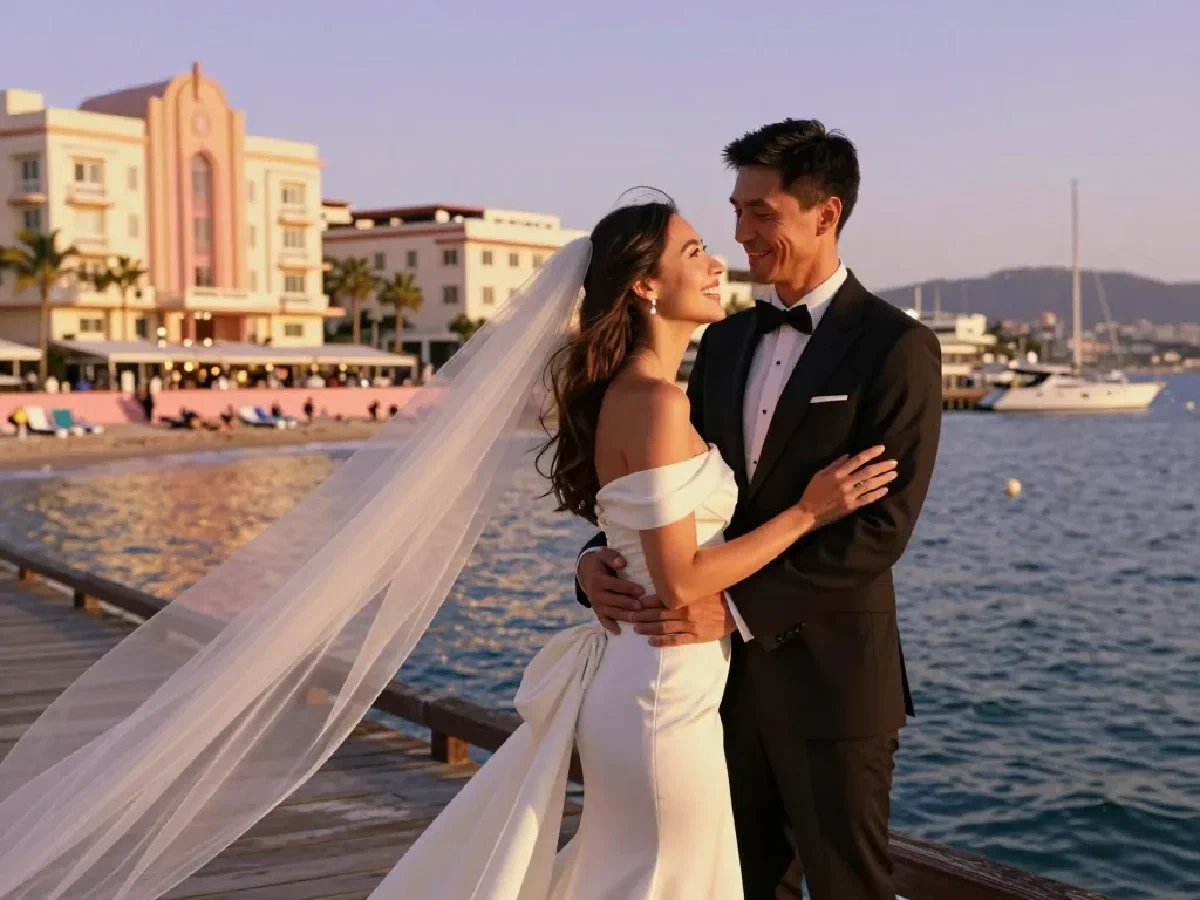
The last ferry pulls away from the old port, and the light over the Bay of Cannes begins its slow, theatrical shift. You’re standing on the stone quay, heart thumping beneath your dress, wondering if the sky will really do what the photographers promised. Then it happens. The horizon blushes, bleeding warmth into the sea, and La Croisette glitters behind you like a ribbon of gold. This is the moment a sunset wedding photoshoot in Cannes stops being a plan and becomes a feeling—a fleeting window when the entire city seems to hold its breath for your camera. You didn’t just pick a location; you picked a moment. In this guide, I’ll walk you through the exact rhythm of that golden hour. Where to stand. How to move. What to let go of. So your most unforgettable wedding photo isn’t a lucky accident, but the story you carry home.
Why a Sunset Wedding Photoshoot in Cannes Feels Like a Dream
The vows are said, the music fades, and a whisper cuts through the applause: it’s time. Not for the reception—not yet—but for the fleeting minutes that will shape how you remember everything. You step toward the Croisette, the sea breeze tugging at your veil, and the sky starts to shift. This is the moment you’ve been dreaming of without realizing it: a sunset wedding photoshoot in Cannes, where the light does all the work, and your only job is to hold hands and breathe.
The First Glimpse of Golden Light Over the Mediterranean
The sun begins its slide behind the Esterel Mountains, and the air turns thick, warm, almost honeyed. You glance at your partner, and their face is lit from the side—softly, gently, as if someone dimmed a giant lamp just for you. That’s the golden hour working its quiet spell. In Cannes, this isn’t just any sunset; it’s a slow, deliberate show over the Baie de Cannes, where the water shifts from deep blue to molten gold, and the old town’s facades glow like amber.
Your photographer will lead you to a spot where the light wraps around you both—maybe the beach near the Palais des Festivals, or the Suquet hill with the bay sprawling behind. Timing is everything: the first ten minutes after the sun touches the horizon are pure alchemy. Shadows stretch, colors deepen, and every kiss, every laugh, every stolen glance is painted in a palette no filter can mimic. You don’t have to pose; just stand close and let the light find you. That’s why couples often say these shots feel less like photos and more like memories they somehow stepped into.
What Makes the Western Sky So Special for Your Photos
Cannes faces west, so the sunset isn’t an afterthought—it’s the entire stage, front and center. Unlike other coastal towns where the sun hides behind buildings or cliffs, here the horizon stretches wide open. The sky becomes a canvas: streaks of coral, lavender, and tangerine bleeding into each other, with the Îles de Lérins floating as a distant silhouette. This western exposure gives your photos a natural, layered depth—the sea in the foreground, the islands mid-frame, and the sky dominating everything above.
For the best results, your photographer will likely suggest a few simple moves that make all the difference:
- Face the sun at a slight angle, not directly, to avoid squinting and to catch rim light on your hair and shoulders.
- Use the water as a mirror—reflections double the color and add a romantic symmetry.
- Move slowly; golden hour light changes every minute, so a gentle walk along the shore gives you dozens of unique backdrops without changing location.
The light here has a unique quality too: it’s softer and more diffused than inland sunsets, thanks to the sea’s moisture. Your skin looks naturally radiant, no touch-up needed. And because the sun dips behind the mountains to the west, the final minutes cast a warm, even glow that flatters every angle. A typical session with a skilled local photographer for a sunset wedding photoshoot in Cannes runs from €350 to €900 per hour, depending on experience and whether you choose a full package with prints or just digital files. But honestly, the price feels small when you’re standing there, watching the sky turn pink, knowing these are the frames you’ll revisit for decades.
Finding the Perfect Backdrop for Your Sunset Wedding Photoshoot in Cannes
The air turns honey-colored. The sea melts into rose gold. You step out of the hotel, hand in hand, the train of your dress brushing the warm pavement—and for the next hour, the whole town seems to hold its breath for you. That is the promise of a sunset wedding photoshoot in Cannes: a fleeting, golden window where every frame feels lifted from a film you never want to end.
Walking the Croisette and the Old Port as the Sun Dips
Start where the glamour is most tangible: the Boulevard de la Croisette. As the sun begins its slow drop toward the Îles de Lérins, the palm-lined promenade turns into a runway of light. Walk slowly. Let the breeze catch your veil. Pause by those iconic red-and-white striped chairs—they are pure gold for candid, joyful frames. Behind you, the bay shimmers; the distant yachts bob gently, masts catching the last rays. A few minutes further, the Old Port offers a different texture: weathered wooden decks, ropes coiled like sculptures, the soft clink of rigging against masts. Lean against a railing, look at each other instead of the camera, and let the story unfold naturally. The contrast between polished Croisette and rustic harbor gives your gallery rich variety, and the light at this hour is forgiving—soft shadows, warm highlights, no harsh glare. A photographer who knows the area will find where the light pools between the boats, turning an ordinary walk into a sequence of intimate, golden moments.
Climbing the Suquet for a Panoramic View of the Coast
For a view that makes your heart skip, head up to the Suquet, Cannes’ old quarter. The climb is short but steep, winding through narrow cobbled streets with laundry strung overhead and ivy creeping over stone walls. At the top, the medieval tower and the small square open onto a panoramic terrace overlooking the entire bay. From here, the sunset becomes a layered masterpiece: terracotta rooftops below, the crescent of the Croisette curving into the distance, the sea stretching to the horizon. The golden hour hits this spot differently—it backlights the city, throwing the coastline into silhouette while painting the sky in gradients of peach, lavender, and deep amber. Pose against the old stone ramparts, or walk toward the viewpoint with the city sprawling behind you. The Suquet also hides quieter corners, like the garden near the church, where you can steal a kiss under a flowering tree without an audience. Because the light fades faster at this elevation, plan to arrive about twenty minutes before sunset to capture both the bright glow and the softer, duskier tones. The result is a set of images that feel timeless, as if lifted from a travel editorial or a classic romance.
Choosing Between the Beaches for a Quiet or Lively Setting
Not all beaches are equal when it comes to a sunset wedding photoshoot in Cannes, and your choice sets the entire mood. For a secluded, almost private feel, walk toward the far end of the Croisette, past the last hotels, where the sand widens and the crowds thin. Run barefoot along the water’s edge, let the waves chase your heels, and capture reflections of the sky in the wet sand. There is a raw, elemental beauty here—just the two of you, the sea, and the changing colors above. For a more vibrant backdrop, stay near the center of the bay, where beach clubs set out white loungers and striped umbrellas. This setting adds a touch of Riviera glamour, with sleek lines, soft fabrics, and the occasional sailboat gliding by. The lively chatter becomes a gentle hum, and your photographer can use the club’s architecture to frame you against the sunset. To mix both, start on the quieter sand and end at the edge of a beach club as the lights begin to twinkle on. Below is a quick guide to help you decide:
| Setting | Vibe | Best For | Light Quality | Crowd Level |
|---|---|---|---|---|
| Far end of Croisette | Secluded, natural | Candid, barefoot shots | Soft, low horizon | Very low |
| Central bay beach clubs | Glamorous, stylish | Posed, elegant frames | Warm, with reflections | Moderate |
| Near the Old Port rocks | Rustic, textured | Dramatic silhouettes | Golden, angled | Low |
| Plage du Midi (west side) | Local, laid-back | Long walks on sand | Bright, lingering | Low to moderate |
| Near the Palm Beach pier | Open, breezy | Wide-angle sunset shots | Clear, unobstructed | Variable |
Take your time. Feel the sand under your feet. Let the rhythm of the waves guide your poses. Whether you choose solitude or celebration, the golden hour will do the heavy lifting—you just need to show up and be present.
Planning Your Timing and Logistics for a Smooth Shoot
The date is locked. The dress hangs ready. Now you’re staring at a map of Cannes, wondering how to catch that perfect golden glow. Here’s the truth: a sunset wedding photoshoot here isn’t just about showing up with a camera. It’s a carefully choreographed dance with the sun, the sea, and the city’s unpredictable rhythms. Every minute counts before the light slips away.
Working with the Changing Sunset Hour Across the Seasons
The sun doesn’t keep a steady schedule. In the heart of summer, golden hour stretches lazily from around 8:30 to 9:45 PM, giving you a luxurious window to wander from the old port to the Croisette. But autumn creeps in and shrinks that window dramatically—by late October, the sun dips behind the Estérel mountains by 6:15 PM, so you’ll need to start shooting by 5:00. Winter is even more brutal. A 4:45 PM sunset means you’re racing against the clock, often finishing just as streetlights flicker on.
This seasonal shift changes everything. In summer, you can afford breaks, outfit changes, and leisurely walks between locations. In winter, pre-scout every spot and rehearse your poses so you don’t waste precious minutes. Spring is your sweet spot—April and May offer a reasonable 7:30 to 8:15 PM sunset with softer, more diffused light. Whatever the season, check the exact sunset time for your specific date and work backwards. Aim to be in your primary location 45 minutes before the sun actually sets, because the best color often appears just after it touches the horizon, not before.
Understanding Permits and Rules for Cameras and Equipment
You might assume a couple with a photographer on a public beach needs no paperwork. Cannes is stricter than you’d imagine. The Croisette’s sandy stretches are public, so a simple handheld camera is generally fine. But the moment you bring a tripod, a lighting stand, or a large reflector, you’re entering different territory—the city considers that professional equipment, and you may need a filming permit. The Palais des Festivals steps are technically private property and require prior authorization for any staged shoot, even with a small crew.
Here’s what you should know before you pack your gear:
- Public beaches and the Promenade: No permit needed for handheld cameras or small bags. Tripods are technically allowed but must be kept off pedestrian walkways.
- Palais des Festivals and hotel exteriors: You’ll need written permission from the venue or management. Expect a processing time of 3 to 5 business days.
- Old Port and marina areas: These are semi-public. A permit is usually not required, but you must avoid blocking boat access or commercial traffic.
- Private villas and rooftop terraces: Always ask your host or venue manager in advance—many have exclusive photography clauses in their contracts.
A professional filming permit in Cannes typically ranges from €80 to €250 per day, depending on crew size and equipment. For a simple couple’s shoot, you’ll likely fall at the lower end, but budget for the higher range if you’re bringing multiple lenses and a drone.
Preparing for the Mistral Wind and Other Weather Surprises
You’ve seen the postcards—perfect blue skies, calm turquoise water, not a cloud in sight. But Cannes has a wild side, and her name is the Mistral. This dry, cold wind sweeps down from the north with little warning, turning your gentle seaside stroll into a hair-whipping, dress-flying battle. It’s most common in winter and early spring, but it can strike any month, and it often brings a stunningly clear sky that makes sunset colors even more vivid. The trick is not to fight it—lean into it. Veils become dramatic sails, and flowing fabrics catch the light in ways you never imagined.
That said, you need a backup plan. If the wind gusts above 30 mph, it’s not just uncomfortable—it’s dangerous near the water, and your photographer’s gear is at risk. Many couples relocate to sheltered spots like the narrow streets of Le Suquet, where stone buildings break the wind. Rain is rarer but not impossible, especially in October. Your photographer should have a clear “weather call” deadline, usually 2 to 3 hours before the shoot, to decide whether to postpone or move indoors to a covered terrace or a hotel lobby with large windows. And always pack a light jacket or shawl—even in summer, the temperature drops sharply once the sun disappears behind the hills, and you don’t want your shoulders tense in every frame.
The best sunset photos in Cannes are often taken 10 minutes after the sun is gone, when the sky turns from gold to deep magenta—don’t pack up early.
A sunset wedding photoshoot in Cannes rewards those who prepare for the unexpected. Whether you’re chasing the last rays of a June evening or braving a brisk November wind, the magic is always there—you just have to be flexible enough to catch it.
Making the Most of the Golden Hour with Creative Poses and Angles
The sun hangs low over the Bay of Cannes, painting the sky in streaks of amber and rose. You’re standing on a quiet stretch of sand near the Palm Beach jetty, your partner’s hand in yours, and the photographer whispers, “Turn slightly toward the water—yes, like that.” In that moment, the entire Croisette fades into a blur of lights, and you realize this is why you chose a sunset wedding photoshoot in Cannes: not just for the glamour, but for the way the fading light turns an ordinary embrace into something cinematic. The golden hour here isn’t a backdrop—it’s a collaborator, and with the right poses and angles, you can make it work for you.
Using the Esterel Hills and Lérins Islands as Natural Framing
As the sun begins its slow descent behind the red porphyry cliffs of the Esterel, you don’t need elaborate props or staged sets. The landscape itself offers a layered composition that few studios can replicate. Stand with your backs to the hills, letting the jagged silhouettes frame your shoulders, while the photographer shoots from a low angle to capture both your faces and the warm glow spilling over the horizon. The Lérins Islands, just offshore, act as a softer counterpoint—their dark shapes floating in the water like ink drops, giving depth to an otherwise flat sea view.
Try a simple pose: one partner facing the camera, the other turned toward the islands, their chin resting on the first’s shoulder. This creates a natural diagonal line that guides the viewer’s eye from your faces to the distant peaks. For a more intimate angle, walk slowly along the shoreline, letting the photographer shoot from behind—your silhouettes against the sun, the Esterel’s outline tracing your bodies. The key is to keep the horizon line off-center, placing the hills in the upper third of the frame. That way, the landscape doesn’t compete with your expressions; it cradles them.
Capturing Movement and Emotion as the Light Fades
The last ten minutes of golden hour are pure alchemy—the light turns honeyed, then coppery, and every second feels like a secret. This is when movement becomes your best friend. Static poses can feel stiff, but a gentle spin, a shared laugh, or a slow walk toward the water brings out the unguarded emotion you’ll want to remember. Have the photographer use a slower shutter speed to catch the motion blur of your dress or the hem of a jacket lifting in the sea breeze. The result is less a photograph, more a feeling captured mid-breath.
- The hair-toss glance: Turn your face into the wind, letting strands catch the light, while your partner looks at you—not the camera—with a soft smile.
- The lifted embrace: One partner lifts the other slightly off the ground, spinning just enough to blur the background, the Esterel hills becoming a watercolor wash.
- The forehead touch: Stand chest-to-chest, foreheads together, eyes closed, as the sun dips below the horizon. This works best when the photographer shoots from a distance, using a telephoto lens to compress the space and keep the warm tones intact.
As the light fades, don’t rush to pack up. The blue hour that follows—that deep, velvety twilight—offers a different kind of magic, where the streetlights along the Croisette begin to twinkle and your silhouettes become stark against the afterglow. Let the photographer capture one or two frames in this transition; they often become the most poetic shots of the day.
The best sunset photos aren’t taken when the sky is at its brightest—they’re taken in the last three minutes, when you’ve stopped posing and started living.
Backup Spots and Indoor Alternatives When the Sky Turns Grey
Cannes is glorious, but even the French Riviera has its moody days. A thick bank of clouds can swallow the sunset without warning, turning your golden-hour dream into a flat, grey expanse. Don’t panic—this is where a flexible plan saves the shoot. The key is to have a list of sheltered or indoor spots that still carry the city’s charm, so you’re never left chasing a sun that won’t appear.
Start with the covered terraces of the Carlton or Majestic hotels—their ornate facades and warm interior lighting offer a glamorous fallback. Position yourselves near a large window with sheer curtains; the diffused light mimics the softness of golden hour without needing the sun. Alternatively, the narrow alleys of Le Suquet, the old town, provide dramatic shadows and stone textures that look stunning in overcast conditions. A simple black-and-white conversion can turn a grey sky into a timeless, moody aesthetic.
For a more structured backup, consider the Palais des Festivals’ modernist lines or the indoor garden at the Musée de la Castre, which offers panoramic views even when the weather misbehaves. If you’re willing to travel a few minutes, the Villa Rothschild’s marble staircases and gilded mirrors create a regal atmosphere that doesn’t rely on natural light at all. In such cases, a professional photographer will switch to off-camera flash or high-ISO settings, so you still get sharp, expressive images. Remember: a grey sky isn’t a failure—it’s an invitation to lean into intimacy, using the muted palette to draw attention to your faces, your hands, and the quiet joy between you.
The Last Frame
The sun dips low, a molten coin sinking into the Mediterranean. On the beach, the couple kicks off their shoes, toes sinking into sand still warm from the day. The air smells of salt and jasmine. The photographer waits, camera ready, as the sky erupts into shades of tangerine and rose. No one speaks. The shutter clicks, but the real work is already done—by the light, by the moment, by the city itself.
A sunset wedding photoshoot in Cannes isn’t about striking a pose. It’s about showing up. The golden hour does the heavy lifting, wrapping you in a glow that needs no filter. You just stand there, hand in hand, and let the fading day paint your story. The bay shimmers. The hills behind the city turn to silhouettes. And somewhere between the first kiss and the last laugh, the camera catches something real.
Years later, you won’t think about the timing or the angles. You’ll remember the breeze off the water, the way your dress fluttered, the sound of your own joy bouncing off the old stone walls. That’s the trick—the photos aren’t portraits. They’re heartbeats, frozen.
So book that slot. Let the sky slow-burn into dusk. Walk away with frames that feel less like pictures and more like the feeling of being alive.
Frequently asked questions
We're planning our wedding photoshoot in Cannes at sunset. What's the best time to start so we catch the golden light?
Where are the most iconic spots in Cannes for sunset wedding photos?
What should we wear for a sunset photoshoot in Cannes, considering the weather and the setting?
Do we need a permit to take wedding photos on public beaches or in the city of Cannes?
What if the weather is cloudy or rainy on our scheduled sunset shoot in Cannes?
How long does a typical sunset wedding photoshoot in Cannes last?
Can we include our wedding party or family in the sunset photoshoot, or is it just for the couple?
Are there any specific traditions or local customs in Cannes we should know about for a wedding photoshoot?
What's the best way to get around to different photo locations in Cannes during sunset?
How much should we budget for a professional sunset wedding photoshoot in Cannes?
View recommended photographers
Affiliate disclosure: this site may earn a commission when you book through links on this page, at no extra cost to you.
View recommended photographersRelated guides
The French Riviera Elopement Photographer Who Makes Far From Home Feel Like Forever
Cannes wedding photographer for international couples—capturing your love story on the French Riviera, turning a far-from-home elopement into a timeless forever.
The Secret to Choosing the Perfect French Riviera Wedding Photography Package for Your Once in a Lifetime Day
Discover how to choose the perfect French Riviera wedding photography package, capturing every sunlit moment of your once-in-a-lifetime day.
How to Find the Cannes Wedding Photographer Who Turns Luxury Hotel Moments Into Forever Memories
Inside a sunlit suite overlooking the Croisette, your dress catches the light—find the Cannes luxury hotel wedding photographer who turns fleeting moments into timeless, cinematic memories.